
 Author: Robert Thomas Hayes Link
 Editor: Thomas DeMarco
What do you suppose connects the comedic film character Elle Woods to the great Mohandas Gandhi? They are both lawyers I draw inspiration from, as well as from a host of others. Some of my inspirations heightened my intellectual curiosity toward the law, some helped me understand the value of standing up for what was right, and others entertained me.
Robert Heinlein’s book Stranger in a Strange Land introduced me at age fourteen to Jubal Harshaw: attorney, army surgeon, and wildly successful author. His days of billing and litigating were behind him, but when the plot required it, all his legal acumen and ability came flashing through. Much of the book dealt with a fictional legal question of whether a single man could own a planet. Another plot line dealt with how to settle a dispute involving not simply generational wealth but an estate which could topple a political structure. It wasn’t just the character that steeped my interest in law, but how he navigated the complex legal concepts that were essential to the story.
But while Jubal Harshaw made me want to be a lawyer and made me want to learn to think sharply and forcefully and to stand for what was good and right, he was not my only inspiration. Like many people, I grew up revering the man on the recently discontinued copper coin. By all accounts, this Illinois lawyer aspired to a level of honesty and equanimity which many would find laughable rather than laudable today, as when he told a graduating class of law students that if they thought being lawyers meant having to be liars, they should forego practice of law rather than choosing an occupation “in the choosing of which you do, in advance, consent to be a knave.”[1] In that same lecture, President Lincoln advised:
Discourage litigation. Persuade your neighbors to compromise whenever you can. Point out to them how the nominal winner is often a real loser — in fees, expenses, and waste of time. As a peacemaker, the lawyer has a superior opportunity of being a good man.[2] There will still be business enough. [3]
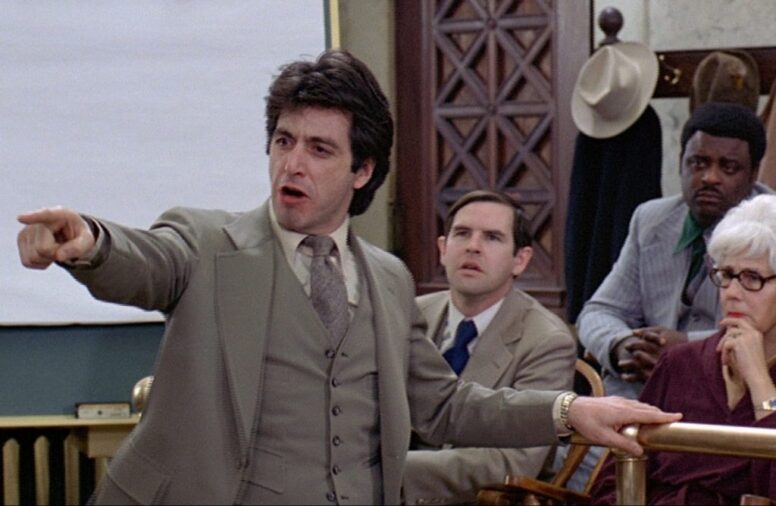
In addition to finding the law fascinating and wanting to stand up for what was right, I also found lawyers entertaining: Al Pacino’s portrayal of Arthur Kirkland in the film And Justice For All and John Houseman’s role as Professor Kingsfield in The Paper Chase are certainly in the mix of influences which made the law attractive to me as a youth. However, entertainment alone no longer propels me. Instead, I find myself with new inspiration added to the mix.
“Be a Good Human”[4] is the bedrock of how Tyson & Mendes attorneys operate. For a person who finds inspiration in the fact that Gandhi was a lawyer, that is solid ground indeed. Working at a firm which emphasizes being a good human ensures my work as a lawyer is fascinating, entertaining, and aligns with my values—and that fulfills me as a lawyer.
Keep Reading
 Getting to Verdict One Issue at a Time
 The Scariest Thing This Halloween: Nuclear Verdicts®!
 A Fall Without a Proven Cause: Causation and the Duty to Preserve Surveillance Footage in Weathers v. John C. Choe, DDS, Inc.
 Special Report: Five Key Takeaways on Florida Plaintiff Tactics
 Plaintiffs’ Attempts to Expedite an Appeal Gone Wrong: Maniago v. Desert Cardiology Consultants’ Medical Group, Inc.
 Good Record-Keeping is the Best Medicine
 Confidential Does Not Mean AI-Proof: Updating Protective Orders for AI
 The Arizona Pocket Fire: Do Not Wait for the Flames, Act Now!
 The Reason for Reason
More by this author
 Punitive Liability Through the Rear Window: Lessons Learned from a Class Action Filing
 Speculation or Inference: Dasilva v. Union Carbide and Determination of Triable Issue of Fact
 A Deep Dive Into the Not-So-Modern Problem of “Deepfakes”
 From Sci-Fi to Humanity: Lawyers Who Inspired Me
Sources
[1]Abraham Lincoln’s Notes for a Law Lecture, https://www.abrahamlincolnonline.org/lincoln/speeches/lawlect.htm
[2] One prefers to think President Lincoln would avoid such sexist language today.
[3] Ibid.
[4] Robert F. Tyson, Jr. & Cayce Lynch, Nuclear Verdicts®: The Apex – Break the Pattern (2026).