
 Author: Doria Gaulua Thomas
 Editor: Grace Shuman
Introduction: The Cost of Doing Business in the Hellhole
The system is what it is. You are a corporate defendant walking into a Downtown Los Angeles courthouse, and you already know the score. It is hot, the air in the hallways is thick with the smell of floor wax and quiet desperation, and you’re stepping onto a battlefield where the rules feel rigged against you from the get-go: it is one of the Judicial Hellholes®. But those are just neat little buzzwords for a much dirtier, far more expensive reality.
You sit there at the defense table, wearing a suit that suddenly feels a little too tight, while the plaintiff’s attorney goes to work serving up a perfectly plated dish of pure, unadulterated outrage. They weaponize every ignored email, every delayed fix, every piece of standard corporate red tape. They don’t want the jury’s sympathy. Sympathy is a cheap appetizer. They want anger. They want that visceral, gut-level fury that makes a jury want to burn the whole house down and hand you the bill. And if you walk in there stonewalling, or playing the arrogant, faceless corporation? You are just handing over the matches.
Instead, defendants must proactively neutralize this threat by deploying the “Core Four” strategies—Personalizing the Defendant, Accepting Responsibility, Giving a Number, and Arguing Pain and Suffering. Integrating these tactics early disrupts the plaintiff’s carefully crafted narrative and defuses juror anger before it can ignite into a nuclear award.
Anatomy of the Venue-Risk Narrative
Recent venue-risk reports continue to elevate Southern California as a primary threat for corporate defendants, accurately reflecting the volatile environment on the ground. The American Tort Reform Foundation’s (ATRF) 2025–2026 Judicial Hellholes® Report recently ranked Los Angeles as the number one worst jurisdiction in the country.[i] The report explicitly noted “lawsuit abuse and judicial bias in Los Angeles have set it apart, propelling the jurisdiction to the very top of the list,” ultimately concluding the venue “separated itself as the worst of the worst in 2025.”[ii] Cases will continue to be tried in these venues, so the defense bar has no choice but to adapt.
Core Four: Actions to Defuse Flashpoints
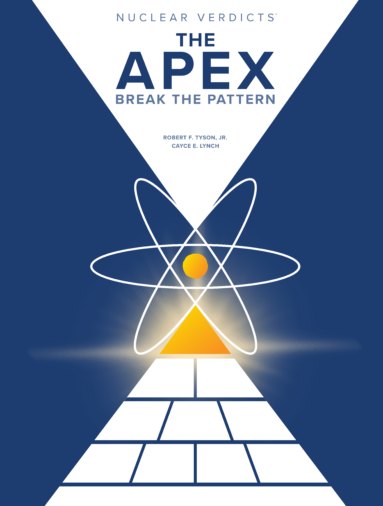
As noted in the new book Nuclear Verdicts®: The Apex – Break the Pattern, the plaintiffs’ bar is using anger to win big:
Up until about 20 years ago, the number one emotion the plaintiffs’ bar tried to elicit from the jurors was sympathy. The pivot towards anger was advanced by the publication of Reptile: The 2009 Manual of the Plaintiff’s Revolution (“Reptile”) (since rebranded as “The Edge”), which was the result of years of jury research specific to how the reptilian brain drives jury decision-making. […]Today’s plaintiffs’ bar uses specific tactics to make jurors feel this emotion—anger—to drive a Nuclear Verdict. These changes in their approach to trial have resulted in higher jury verdicts occurring more frequently across almost every jurisdiction in the country, regardless of case type or injury severity. To arrive at an outsized jury award, jurors must, at a primitive and deeply felt level, be angry at the defendants for something they did or failed to do.[iii]
With Tyson & Mendes’ Nuclear Verdicts® prevention strategy, The Apex℠, the defense can fight back even in the most plaintiff-friendly jurisdictions. Built on four strategies known as the Core Four, The Apex℠ framework is designed to reduce juror anger, the primary driver of Nuclear Verdicts®. The Apex℠ reframes the narrative pre-suit, before it reaches the courtroom. Taking action early allows the defense to build a more effective case, capable of swaying the jury:
Personalize the Defendant: Early identification of the defense’s representative, along with preparation and planning for ways to show the defense cares for its employees and community, will build a stronger case, making it more difficult for plaintiff’s counsel to villainize a faceless company. Psychologically, it is easy for a jury to punish a nameless corporate monolith. By presenting a human representative who shows genuine empathy, the defense disrupts the plaintiff’s narrative of corporate greed and indifference, making the jury hesitate to inflict disproportionate financial harm on real people.
Accept Responsibility: The defense must accept responsibility early. Defense can even accept responsibility without accepting liability. Either way, it is important that the defense is shown taking responsibility for their part in the incident, even if they truly did the best they could to prevent it. Juror anger spikes when a defendant appears evasive or defensive. Accepting responsibility for safety psychologically disarms the jury’s desire to “teach the defendant a lesson,” shifting the focus back to a rational assessment of the facts, rather than a punitive crusade.
Give a Number: A reasonable, anchored number will help the jury understand the value of the case. While giving a number is an important step in a trial, that number should be based on deep research and an understanding of the case: What has been lost? What can be done to fix it? What medical bills need to be addressed? When the defense refuses to offer a number, they surrender the psychological anchor of the trial entirely to the plaintiff’s astronomical demands. Providing a well-researched number grounds the jury in reality and disrupts the plaintiff’s attempt to make their exorbitant figures seem like the only logical conclusion.
Argue Pain and Suffering: Finally, the defense must prepare to argue pain and suffering. The plaintiff’s story of pain and suffering should not be left exclusively to plaintiff’s counsel. Beginning early in the life of the case, the defense needs to understand who the plaintiff is, what they want, and what they have lost. They must address pain and suffering to show a good-faith effort to make the plaintiff’s life better. Ignoring a plaintiff’s pain signals callousness and fuels the exact anger plaintiffs seek to exploit. By directly addressing it, the defense demonstrates reasonableness and undercuts the narrative the defendant is cold and unfeeling.
Takeaway
The insurance defense industry is notoriously slow to adapt to plaintiff tactics specifically designed to enrage jurors. While high-risk venues like California present undeniable challenges, the threat of Nuclear Verdicts® is far from an inevitability. By understanding the psychological drivers of juror anger and implementing proactive mitigation—specifically through the Core Four—defendants can neutralize risks early. Embracing comprehensive frameworks, such as The Apex℠, empowers the defense to break the pattern and reclaim control of the courtroom narrative.
Keep Reading
 Getting to Verdict One Issue at a Time
 The Scariest Thing This Halloween: Nuclear Verdicts®!
 A Fall Without a Proven Cause: Causation and the Duty to Preserve Surveillance Footage in Weathers v. John C. Choe, DDS, Inc.
 Special Report: Five Key Takeaways on Florida Plaintiff Tactics
 Plaintiffs’ Attempts to Expedite an Appeal Gone Wrong: Maniago v. Desert Cardiology Consultants’ Medical Group, Inc.
 Good Record-Keeping is the Best Medicine
 Confidential Does Not Mean AI-Proof: Updating Protective Orders for AI
 The Arizona Pocket Fire: Do Not Wait for the Flames, Act Now!
 The Reason for Reason
Sources
[i] Am. Tort Reform Found., 2025-2026 Judicial Hellholes® Report (2025), https://judicialhellholes.org/reports/2025-2026-executive-summary/.
[ii] Id.
[iii] Robert F. Tyson, Jr. & Cayce Lynch, Nuclear Verdicts®: The Apex – Break the Pattern 419 (2026).