
 Author: Robert Thomas Hayes Link
 Editor: Dr. Alexandra McDermott
Perhaps 1938 is not the year which first jumps to mind when thinking about the “modern” problem of deepfakes. Despite that, 1938 is a good starting point for any discussion—and it tells us about the not-so-modern problem of keeping fakes, forgeries, and frauds out of evidence through tried and true authentication fundamentals.
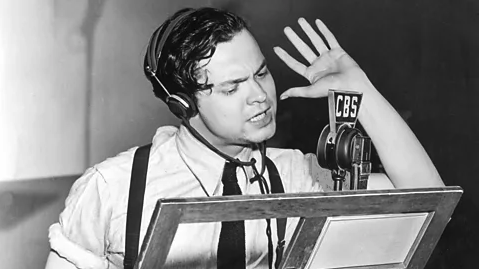
In 1938, a grand hoax was perpetrated on the radio audience of the United States (although it probably wasn’t meant as a hoax). The radio program The Mercury Theatre on the Air[i], broadcast its adaptation of H. G. Wells’ novel The War of the Worlds. The broadcast was delivered in the form of news reports, and many in the unsuspecting listening audience mistook the fiction for true news. Panic ensued.[ii]
Viewed in the right light, the broadcast of The War of the Worlds is a precursor of what today we call deepfakes. What was then a somewhat new technology fooled an unsophisticated audience who had no reason to do what litigators do almost as naturally as breathing: Fundamental authentication of all proffered evidence.
The fight to keep false evidence out of the courtroom is as ancient as courtrooms themselves. So, what is new about deepfakes which makes the topic worth the attention they are getting? The primary difference between deepfakes and any other counterfeit or fakery is the recent shift in ease of access to formerly unthinkable computational power. What twenty years ago could only be accomplished in a movie studio at the cost of millions of dollars can today be accomplished by a child, or bored senior citizen, with a modest computer and internet access. And sometimes the quality of these cheap and easily available fakeries is such as to require non-trivial forensic abilities to prove as fakes. (Other times deepfakes are absurdly simple to spot, as when the computer creates images of someone with six fingers on their right hand.)
However, even with the less obvious fakes, things are not so terrifying to the seasoned attorney as they might be to the unsuspecting layperson. By training or by nature, we have ingrained habits for laying foundations and providing authentication in our blood…and where any of us are anemic we have case law and statute to fortify us. This exact point is made in the a 2021 paper titled, “The Federal Rules of Evidence are Prepared for Deepfakes. Are You?” That paper proclaims:
Unlike the public sphere, where videos can circulate without any reference to where they originated…the proponent has the burden of authenticating evidence…existing strategies already allow for attorneys to challenge alleged deepfakes through targeted discovery, cross-examination of the sponsoring witness, challenging the video’s chain of custody, and calling experts trained in digital forensics to testify…[while] the response to deepfakes must be calibrated appropriately to their danger, many of them can still be detected without extensive forensic investigation.[iii]
What drives the danger of deepfakes, like the danger of the broadcast of The War of the Worlds, is an unsuspecting public’s tendency towards suspension of disbelief. Moving images in particular enjoy an elevated level of acceptance at face value, perhaps deriving from a time when the ability to create or manipulate moving images was limited by access to technology and wealth.
But here too, litigators know the rule “seeing is believing” must always give way to laying proper foundation and proper authentication, which serve to protect our cases from the damage which might be done by uncritically accepting proffered material into evidence. Whether we call it “truth decay,” or, as Katrina Geddes argues, we call it the end of “ocularcentrism,”[iv], it seems true that:
The increasing ubiquity of so-called “deepfakes”—hyperrealistic, digitally altered videos of events that never occurred–has further exposed the vulnerabilities of an ocularcentric society, in which technology-mediated sight is synonymous with knowledge.[v]
What the uncritical public sees on television or social media is what they tend to believe. But federal and state evidence codes require a foundation of relevance first be laid, as well as steps taken to authenticate any proffered evidence—be it sight, sound, or sculpture. The standard rules of evidence (such as Colorado Rules of Evidence § 901 or Federal Rules of Evidence § 901) regarding authentication haven’t changed. Attorneys who are prepared to vigorously argue and follow these rules (adjusted for jurisdiction) are ahead of the game regarding deep, shallow, and all other types of fakery.
There are many technical matters which will come up with increasing frequency as deepfakes (and accusations of deepfakes) become increasingly common. But the natural tendency of law and lawyers to exclude the irrelevant and unreliable will help us keep our cases free of fakery. The fundamental principles of relevance and authentication which served us in 1938, and long before, and every day since are still the first line of defense against modern frauds and counterfeits. The Mercury Theater broadcast would never have fooled counsel, and today’s deepfakes need not fool today’s litigators so long as they lean into the fundamentals of authentication.
Keep Reading
 Getting to Verdict One Issue at a Time
 The Scariest Thing This Halloween: Nuclear Verdicts®!
 A Fall Without a Proven Cause: Causation and the Duty to Preserve Surveillance Footage in Weathers v. John C. Choe, DDS, Inc.
 Special Report: Five Key Takeaways on Florida Plaintiff Tactics
 Plaintiffs’ Attempts to Expedite an Appeal Gone Wrong: Maniago v. Desert Cardiology Consultants’ Medical Group, Inc.
 Good Record-Keeping is the Best Medicine
 Confidential Does Not Mean AI-Proof: Updating Protective Orders for AI
 The Arizona Pocket Fire: Do Not Wait for the Flames, Act Now!
 The Reason for Reason
More by this author
 Punitive Liability Through the Rear Window: Lessons Learned from a Class Action Filing
 Speculation or Inference: Dasilva v. Union Carbide and Determination of Triable Issue of Fact
 A Deep Dive Into the Not-So-Modern Problem of “Deepfakes”
 From Sci-Fi to Humanity: Lawyers Who Inspired Me
Sources
[i] Wikipedia; The War of the Worlds (1938 radio drama)
<https://en.wikipedia.org/wiki/The_War_of_the_Worlds_(1938_radio_drama)>
[ii]Wikipedia; The War of the Worlds (1938 radio drama), Public Reaction
< https://en.wikipedia.org/wiki/The_War_of_the_Worlds_(1938_radio_drama)#Public_reaction>
[iii] John Channing Ruff, The Federal Rules of Evidence are Prepared for Deepfakes. Are You?, Winter 2021; 41 Rev. Litig. 103, 123)
[iv] (Katrina Geddes, Ocularcentrism And Deepfakes: Should Seeing Be Believing?, Summer, 2021; 31 Fordham Intell. Prop. Media & Ent. L.J. 1042)
31 FDMIPMELJ 1042Katrina Geddes Fordham Intellectual Property, Media and Entertainment Law Journal)
[v] (Katrina Geddes, Ocularcentrism And Deepfakes: Should Seeing Be Believing?, Summer, 2021; 31 Fordham Intell. Prop. Media & Ent. L.J. 1042)
31 FDMIPMELJ 1042Katrina Geddes Fordham Intellectual Property, Media and Entertainment Law Journal)