
 Author: Heather M. Abissi
 Editor: Aaron J. Weissman
As we enter Halloween-spooky-season, legal practitioners and carriers alike should be thinking about the scariest end of year statistics: Nuclear Verdicts® are on the rise!
What Should We Be Afraid Of?
The U.S. Chamber of Commerce Institute for Legal Reform (ILR) analyzed 1,288 verdicts reported between 2013 and 2022. Notwithstanding the disruption of the COVID-19 pandemic, the ILR found there were record numbers within the ever-rising instance of Nuclear Verdicts®.[i] The hope in bringing Nuclear Verdicts® to the forefront of legal discussions was that awareness might help lower those numbers. It did not.
Marathon Strategies, a private research firm, researched the problem from a broader angle, not just looking at tort cases, but also including intellectual property and commercial disputes. They found the problem was bigger than imagined, not smaller. In Marathon Strategies’ analysis of the 190 jury verdicts of $10 million dollars or more against corporate defendants in 2025, they noted a 40.7 percent increase over 2024 and the highest annual count in any of its datasets dating back to 2009.[ii]
Increased exposure to verdicts of this nature is frightening because it increases the risk of normalizing disproportionate numbers in the public discourse. The more exposure people have to any subject, the less reactive they become. This process is called “habituation.”[iii] Gone are the days of juror shock at million dollar demands. Indeed, research suggests the larger the ask, the larger the award.[iv]
What Can We Do?
Against this backdrop it becomes critically important for carriers and insurance defense practitioners to educate themselves on the best strategies for combatting Nuclear Verdicts®. While no method can guarantee an outcome, Tyson & Mendes poured months of research into understanding how Nuclear Verdicts® happen, and more importantly, how to prevent them.
The Apex℠, a trial-tested and data-backed strategy for the defense, employs four core strategies: (1) Personalize the defendant, so jurors see the people, not a corporate machine, (2) Accept responsibility to diffuse juror anger and demonstrate reasonableness, (3) Give a number so the jury understands the reasoning behind the defense’s position, and (4) argue pain and suffering, to ensure there is compensation for injuries supported by evidence, not disproportionate awards based on incendiary rhetoric.
Although some of these strategies may seem counterintuitive, the research speaks for itself. So does the common sense underlying the method. It is far easier to find against a faceless and nameless corporation than a person. Individuals can explain their struggles to build a company while going to school at night, and the rallying of friends and family to come together to get the business off the ground, in the hope of bringing jobs to their downtrodden community. It is much more difficult to be angry at someone who says they accept responsibility for their role in having to implement a safety program and ensuring all employee training was up to current standards. At this point, plaintiff’s nuclear number starts looking increasingly unreasonable. Then, when the defense says $100,000.00 is a just award, and explains it will cover all of plaintiff’s medical expenses and provide compensation for the reduced work hours plaintiff will have for the next year while attending physical therapy twice a week – you get the idea.
Words Are Powerful
The plaintiffs’ bar tells the jury a story. It is time for the defense to do so as well. Our pleadings, our motions, our briefs, all need to tell the same unwavering story. The theme of the case begins with our answer to the complaint and must continue all the way through depositions and trial. If your firm is not developing and using a defense theme and strategy in its cases from the first document filed, you are missing an important opportunity to shift the narrative of the case, not just in your mind, but in the court’s and your opponent’s mind as well.
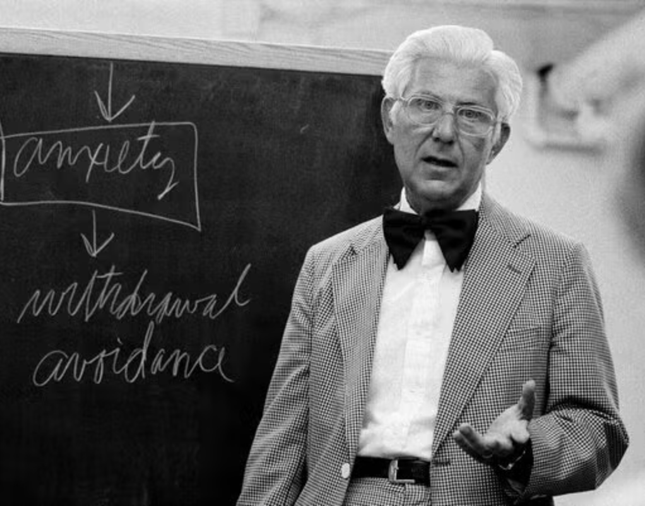
Spaced repetition is a powerful tool. Whether we realize it or not, words are incredibly meaningful. In cognitive psychology, Aaron Beck coined the term “cognitive triad” to describe the interrelationship between thoughts, behaviors, and feelings, and the fact that changing one has an impact on the others.[v] By taking this affirmative step in our behavior to repeatedly discuss in all available contexts these four core strategies, we impact how we think about the case, how we feel about the case, and perhaps more importantly, how the court, our opponents, and the jury think and feel about the case. Because words are powerful, we must choose them wisely and intentionally from day one.
Help Is Available
Every carrier, every firm, every attorney wants to do the absolute best for their clients. Fear of Nuclear Verdicts®, and a general fear of admitting liability can actually make a Nuclear Verdict® more likely. No one makes their best decisions from a place of fear. Our best offense is an informed defense. Apex Defense Consulting is available to help educate, collaborate, and assist law firms and carriers with learning how to employ the skills and strategies of The Apex℠ in practice. There is no reason to tackle new methods alone when help is available. Reach out for help: info@apexdefenseconsulting.com.
Key Takeaways
The rise in Nuclear Verdicts® is “scary.” By using all of The Apex℠ ’s core four strategies of (1) personalizing the defendant, (2) accepting responsibility, (3) giving a number, and (4) arguing pain and suffering, we can be a part of stopping Nuclear Verdicts® and furthering just outcomes at trial; because the scariest Nuclear Verdict® is the one you could have prevented.
Keep Reading
 Getting to Verdict One Issue at a Time
 A Fall Without a Proven Cause: Causation and the Duty to Preserve Surveillance Footage in Weathers v. John C. Choe, DDS, Inc.
 Special Report: Five Key Takeaways on Florida Plaintiff Tactics
 Plaintiffs’ Attempts to Expedite an Appeal Gone Wrong: Maniago v. Desert Cardiology Consultants’ Medical Group, Inc.
 Good Record-Keeping is the Best Medicine
 Confidential Does Not Mean AI-Proof: Updating Protective Orders for AI
 The Arizona Pocket Fire: Do Not Wait for the Flames, Act Now!
 The Reason for Reason
 Waiving the Past to Inflate the Future: When Plaintiffs Take Corenbaum Too Far
Sources
[i] Cary Silverman & Christopher E. Appel, Nuclear Verdicts: An Update on Trends, Causes, and Solutions, (U.S. Chamber of Commerce Institute for Legal Reform May 2024).
[ii] Marathon Strategies, Corporate Verdicts Go Thermonuclear: 2026 Edition (Aug. 18, 2026).
[iii] Catherine H. Rankin, et al., ABSTRACT: Habituation Revisited: An Updated and Revised Description of the Behavioral Characteristics of Habituation, 92 Neurobiology of Learning & Memory 135, 135-38 (2009).
[iv] John Campbell, Bernard Chao & Christopher Robertson, Time is Money: An Empirical Assessment of Non-Economic Damages Arguments, 95 Wash. U. L. Rev. 1 (2017).
[v] Aaron T. Beck et al., Cognitive Therapy of Depression (1979).